
Archery Hunting Accessories: What Actually Earns Its Spot
Most bowhunters buy too much gear in year one. The accessories that earn their spot are fewer than the catalogs suggest — and optics get skipped by everyone.
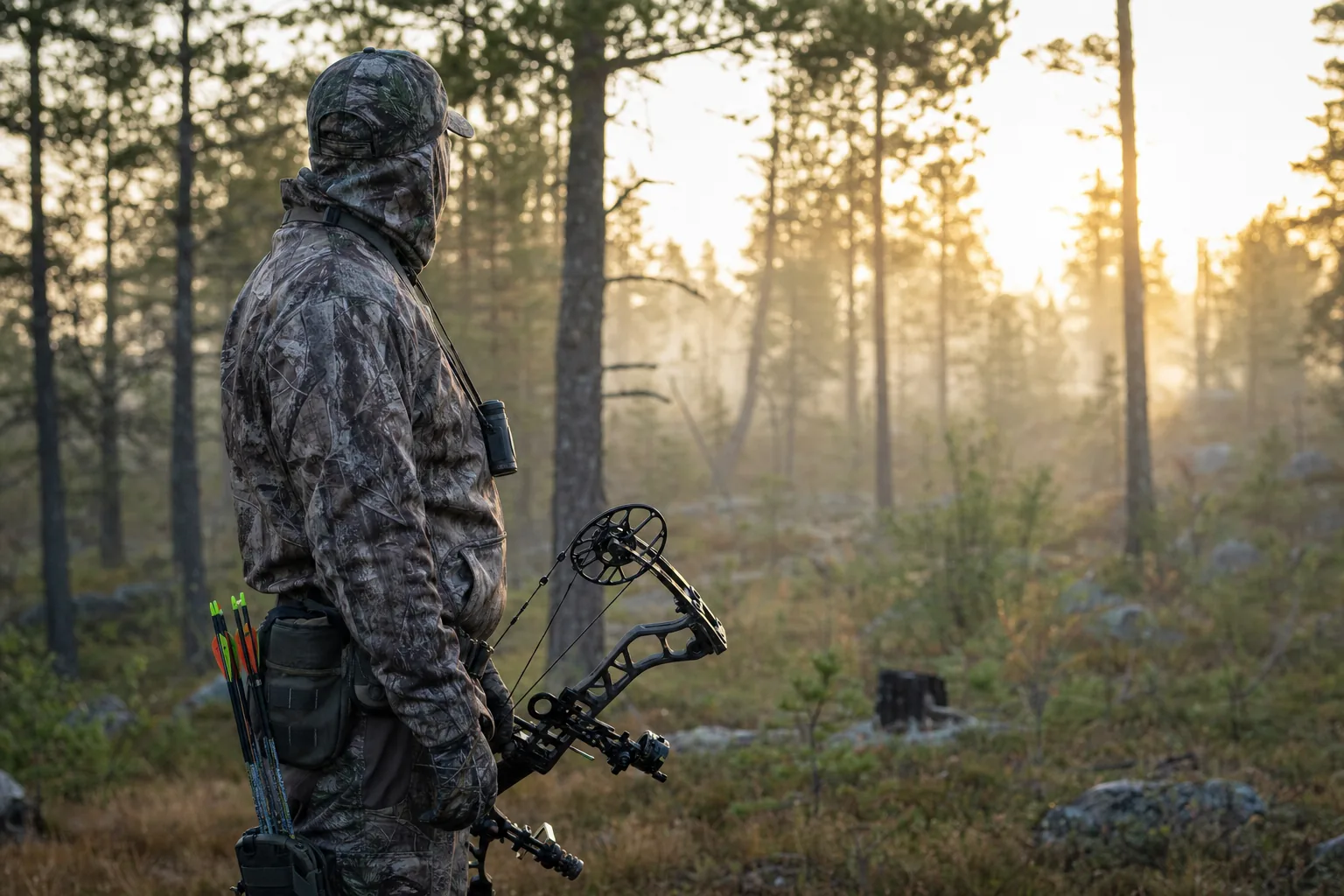
Of all archery hunting accessories, arrows and heads, a release aid, a quiver, and a rangefinder matter most. Match arrow and broadhead weight, buy in that order, skip gadgets until you have spent a season in the field.
01What archery hunting accessories actually matter?
Six categories take the load: arrows, a quiver, optics, targets, and safety basics.
Listicles show thirty products; a long day in the field shows six. Experienced bowhunters settle into a small kit. The criteria: weight matching, package, brand, and season conditions.
- Match practice weight to your broadhead.
- Buy optics before gadgets.
- Shoot with the same setup you hunt with.
02Start with the optics: rangefinder and binoculars
A rangefinder belongs in every bowhunter’s kit: at 20 to 40 yards, a few yards of error move the impact by inches on a deer-sized target. Compact binoculars confirm what you saw from a tree stand — ideal in low light.
This is the category most listicles bury, and where Hunt Premium does its work: we stock great optics designed for hunting, checking how each model holds up in low light and temperature swings. Browse the accessories collection at Hunt Premium to choose among field-ready options for your bow setup.
- Rangefinder: exact yards before the shot.
- Binoculars: confirm target and arrow impact.
- Field reps: same setup, same distances.
03Heads, arrows, and points: what to check before you buy
Check three things in detail before you buy broadheads: total arrow weight, head weight in grains, and the package — insert and nocks included.
| Type | Purpose | Weight rule | When it earns its spot |
|---|---|---|---|
| Field points | Tuning | Match hunting head weight | Every session |
| Fixed-blade heads | Dependable close shots | Match your arrow spine | Brush, tight quarters |
| Mechanical heads | Wider cut on open shots | Match your arrow’s kinetic energy | Open shots |
If the practice point and hunting broadhead weigh the same, your impact stays close. Brand consistency matters: arrows from one batch track closer in spine, and the package matters as much as the head. Ask about arrow length and draw weight when you choose.
04Release aids, quivers, and field carry
Your release should fit your hand and the balance of your bow; a quiver should keep arrows accessible and ride quietly. Noise and access decide which earns its spot.
A wrist-strap versus a handheld model is a feel decision about fit, design, quality, and how quickly it comes to hand. If an accessory does not help at the distances you shoot, it is a gadget.

Stable field support for a radar chronograph, easy to level at the range.

Padded protection for a radar chronograph when it rides in the pack.
05Build your kit in the right order
Buy in this order: optics first, then your arrow setup, then your quiver, then targets and safety basics.
The order saves money and storage — buying a quiver before you settle on a setup means buying two kits. The accessories collection at Hunt Premium covers the field-carry side.
06Frequently asked questions
What accessories do I need for bow hunting?
Arrows, a release aid, a quiver, and a rangefinder or compact binoculars. Match your practice weight to the head you shoot, and shoot with the same setup. That is the core kit; targets and safety basics come next.
Do you need a rangefinder for bow hunting?
Not strictly — but it is the first accessory most bowhunters reach for. A few yards of error move the impact by inches. Hunt Premium stocks and verifies optics.
Fixed or mechanical heads for hunting?
Both work; the choices depend on scenario. Fixed-blade heads suit brush and tight quarters; mechanicals cut a wider diameter on open shots. Match either to your arrow’s weight and spine, check state wildlife regulations, and use the same point weight when you hunt.
- Wikipedia — Archery (accessed August 2026).
- Wikipedia — Bowhunting (accessed August 2026).
- Hunt Premium playbook — published positioning and product data (2026).


